
Decorative Stone or Mulch? A Mt. Olive, NJ Homeowner Guide
April 17, 2025
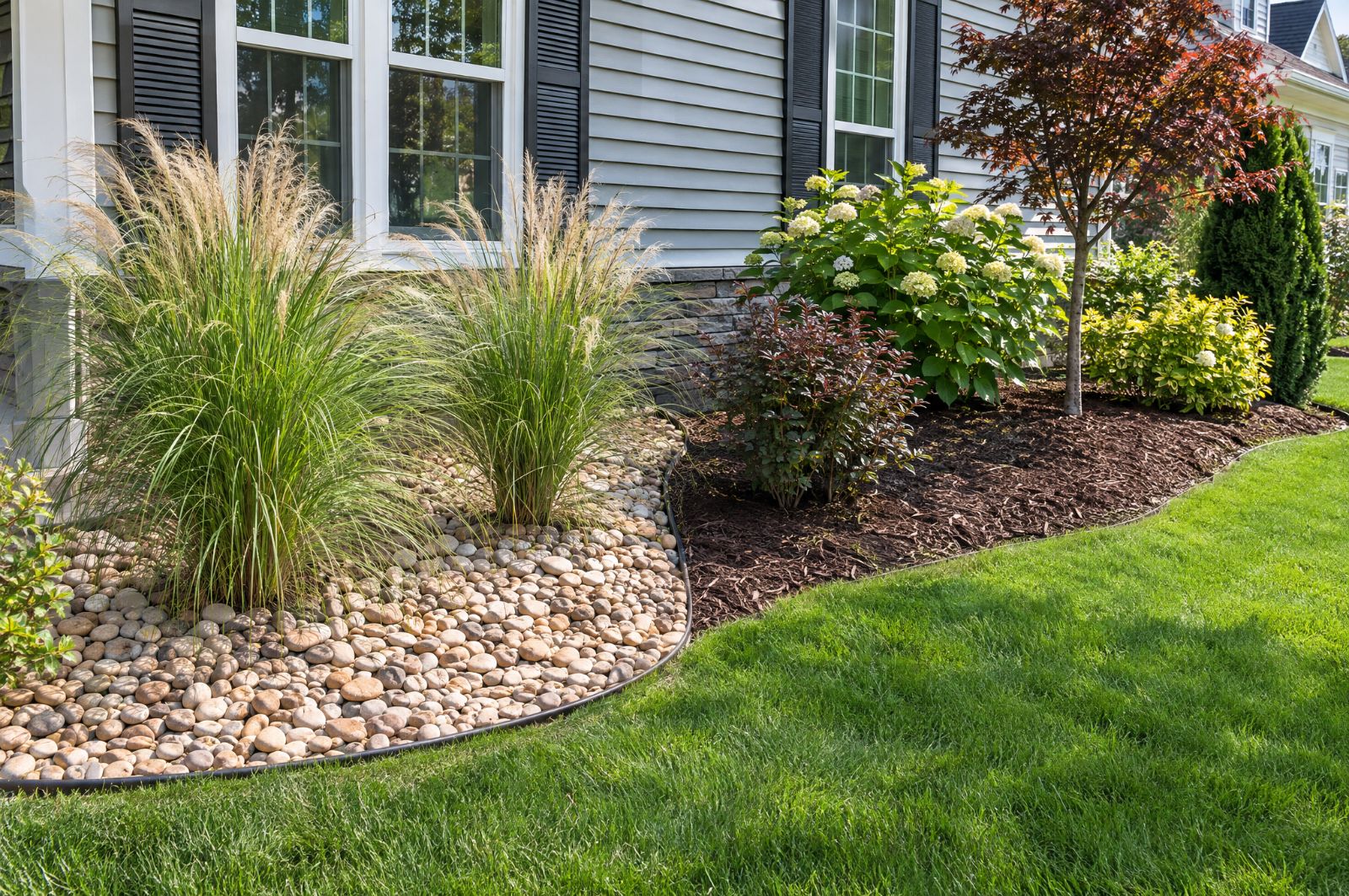
When it is time to refresh the beds, many Mt. Olive homeowners weigh the same question: stay with mulch, or switch to decorative stone? Both have a place, and the best-looking yards often use each where it works best. Here is a straightforward comparison of the common types and how to choose.
The common types of decorative stone
River rock
Smooth, rounded stones in mixed earth tones. River rock looks natural and works well in drip strips, around boulders and in dry creek bed designs. Larger sizes stay put. Smaller sizes can roll onto lawns and walkways.
Pea gravel
Small, rounded stones about the size of a pea. Pea gravel is comfortable underfoot and popular for casual paths and seating areas. It shifts easily, so it needs a firm edge to keep it contained.
Crushed stone
Angular pieces that lock together. Crushed stone stays in place better than rounded stone and gives a crisp, tailored look along foundations and borders.
Stone dust
Fine material that compacts hard. It is a base layer under pavers, not a decorative bed cover. Weeds root in it easily if it is left exposed.
Stone and mulch, side by side
- Lifespan: stone lasts for years. Mulch breaks down and usually needs a fresh layer each year or two.
- Soil health: mulch adds organic matter as it decays, which plants appreciate. Stone adds nothing to the soil.
- Heat: stone in full sun holds heat and can stress nearby plants. Mulch keeps roots cooler.
- Moisture: both slow evaporation, but mulch holds more moisture in the root zone.
- Weeds: both suppress weeds at first. Over time, debris settles into stone and weeds root there too.
- Changes: mulch is easy to pull back when you add plants. Stone is heavy and harder to rework.
- Cost over time: stone costs more up front. Mulch is a smaller, recurring expense.
A simple way to decide for each bed
Instead of choosing one for the whole property, go bed by bed:
- Lots of shrubs, perennials or annuals? Go with mulch. Plants grow better with organic matter, and it is easier to replant.
- A narrow strip with few or no plants, like along the foundation or driveway? Stone is a good fit.
- Under big trees that drop leaves? Lean toward mulch. Leaves blend into mulch but sit on top of stone and need clearing.
- A spot where water runs off the roof? Stone resists washing out better than mulch.
Many homes in Mt. Olive end up with a mix: stone along hard edges and mulch where plants live.
Installing stone versus maintaining it
Putting in a new stone area usually means removing old mulch, laying fabric where nothing will be planted, setting edging and spreading the stone. That is a project for you or a landscape installer. Boris does not sell stone or build hardscape, but routine upkeep of stone and mulch beds is exactly what we do.
How Landscaping by Boris helps
Boris serves Mt. Olive, Flanders and Budd Lake with bed care that keeps both stone and mulch looking clean:
- Mulch delivery and spreading, laid 2 to 3 inches deep and kept away from trunks and stems.
- Bed maintenance, including weeding stone and mulch beds and sharp edging.
- Annual maintenance plans that schedule bed care alongside mowing and cleanups.
Stone and mulch FAQ
Does decorative stone stop weeds for good?
No. It slows them at first, but leaves and dust collect between stones and weeds take root. Regular clearing and weeding keep it clean.
Can I put stone right over old mulch?
It is better to remove the old mulch first. Decaying mulch under stone turns into soil, which gives weeds a place to grow.
How often should mulch be refreshed?
Many beds need a light top-up each spring. Check the depth and add only enough to bring it back to 2 to 3 inches.
Get your Mt. Olive beds looking their best
Boris works with each homeowner directly, with no salespeople or middlemen. Ask for a free estimate on mulch, weeding and edging.