
Eco-Friendly Yard Care in Washington, NJ: Simple Greener Habits
April 17, 2025
Plenty of Washington homeowners want a yard that is easier on the environment, but the shelves of “green” products can make it feel complicated. The good news is that most of the benefit comes from a handful of habits that cost little or nothing. Here are the ones that make the biggest difference in a typical New Jersey yard.
Mow higher and leave the clippings
Most New Jersey lawns are cool-season grasses like tall fescue, Kentucky bluegrass and perennial ryegrass. They do better when kept on the taller side. Longer blades shade the soil, hold moisture and crowd out weeds, which means less watering and less need for weed control.
- Remove no more than about a third of the blade at each mowing.
- Leave clippings on the lawn. They break down quickly and return nutrients to the soil.
- Keep the mower blade sharp so it cuts cleanly instead of tearing.
This is one of the easiest changes to make, and it is part of how Boris approaches lawn mowing and lawn care.
Feed smarter, and follow the rules
New Jersey has a fertilizer law designed to protect waterways. It includes a winter blackout period when fertilizer should not be applied, along with limits on applying near water and on frozen ground. A few greener habits go along with it:
- Feed in the fall when cool-season grass benefits most, rather than heavily in spring.
- Sweep any granules off driveways and sidewalks so they do not wash into storm drains.
- Let leftover clippings do some of the feeding for you.
Use mulch as a tool, not just decoration
A good layer of mulch is one of the most eco-friendly things you can put in a bed. It holds soil moisture, keeps roots cooler in summer, slows erosion on slopes and smothers many weeds before they start. That means less watering and less pulling.
The key is doing it right: 2 to 3 inches total, pulled back from trunks and stems, and refreshed only as needed. Boris offers mulch delivery and spreading that follows those basics.
Water, leaves and plants: work with what you have
Water less, but better
- Water deeply and less often, so roots grow down instead of staying shallow.
- Water early in the morning to cut evaporation.
- Point sprinklers at the lawn, not the driveway.
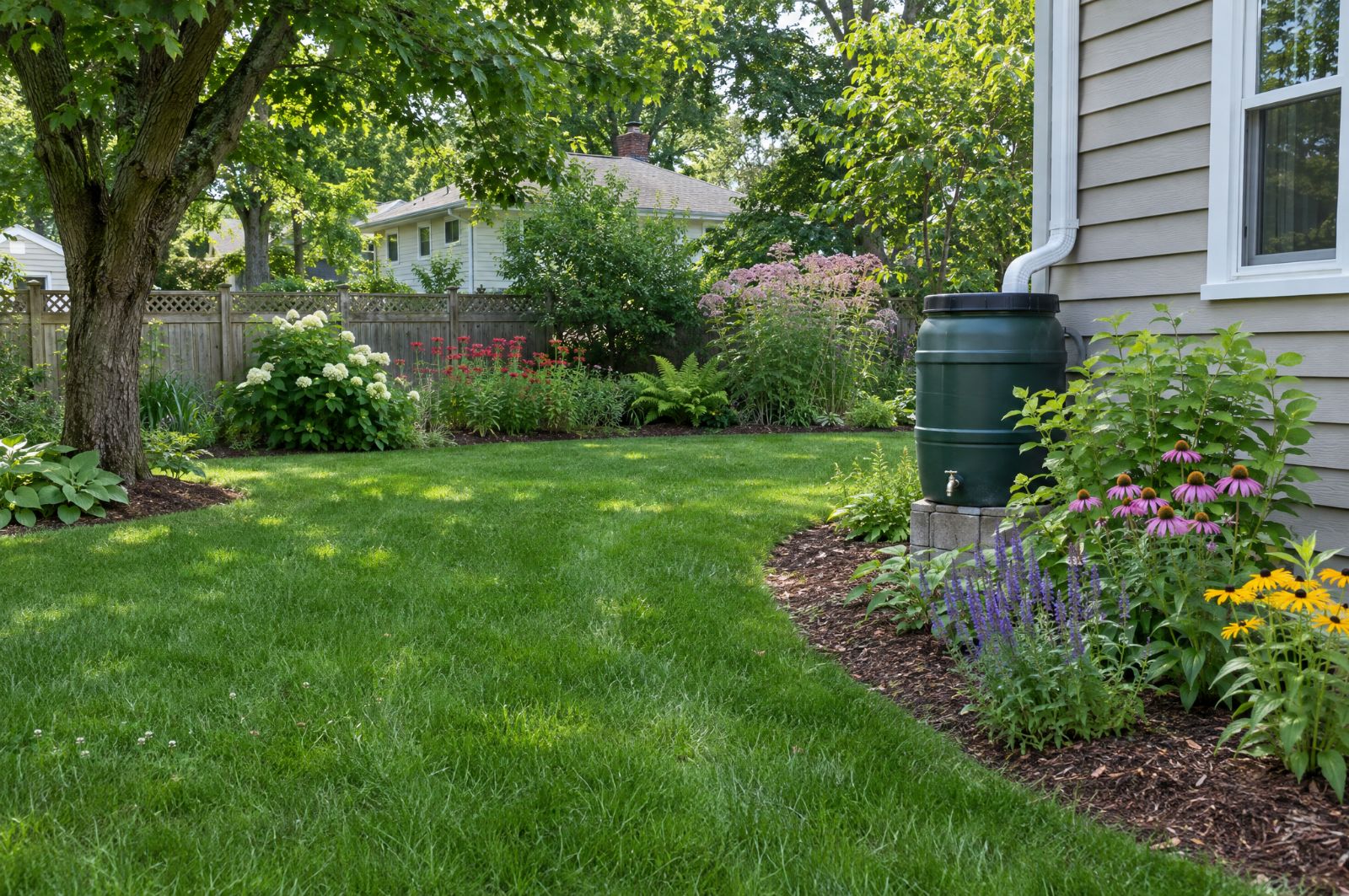
- Consider a rain barrel for watering beds and containers.
Rethink fall leaves
Leaves are not all waste. A light layer can be mulched into the lawn with a mower, and shredded leaves make a good addition to compost or beds. What hurts the lawn is a thick, wet mat left for weeks. On heavily wooded lots, a fall cleanup keeps the grass breathing while you decide what to reuse.
Choose plants that ask for less
The greenest bed is one that does not need constant rescue. When adding or replacing plants, look for ones suited to the light and soil they will actually get. A shade-loving shrub planted in full sun will need extra water all summer, and a plant that outgrows its space will need hard pruning every year. Native plants and well-adapted perennials often handle New Jersey summers and winters with less fuss. Grouping plants with similar water needs together also makes watering simpler and less wasteful. Regular shrub trimming at the right time of year keeps established plants healthy without stressing them.
Is Washington in range?
Landscaping by Boris is based in Long Valley and serves Morris County and nearby towns. Washington is in Warren County, so call (908) 303-3397 to check whether your property is within the service area. You will talk with Boris directly, with no salespeople or middlemen.
Greener yard care questions
Will leaving clippings make my lawn look messy?
Not if you mow regularly. Short clippings fall down into the grass and disappear within a day or two. Long clumps after a missed week are the exception.
Is it bad to bag clippings?
It is not harmful, but it removes nutrients the lawn could use. Bagging makes sense when grass is very long or diseased.
Does mulch really reduce watering?
Yes. A proper layer slows evaporation from the soil surface, which helps beds stay moist longer between waterings.
A healthier yard with less waste
Boris can handle mowing, mulch and cleanups with these habits built in. Call to see if your Washington property is in range.