
How to Calculate Fill Dirt for a Yard Project in Wharton, NJ
April 17, 2025
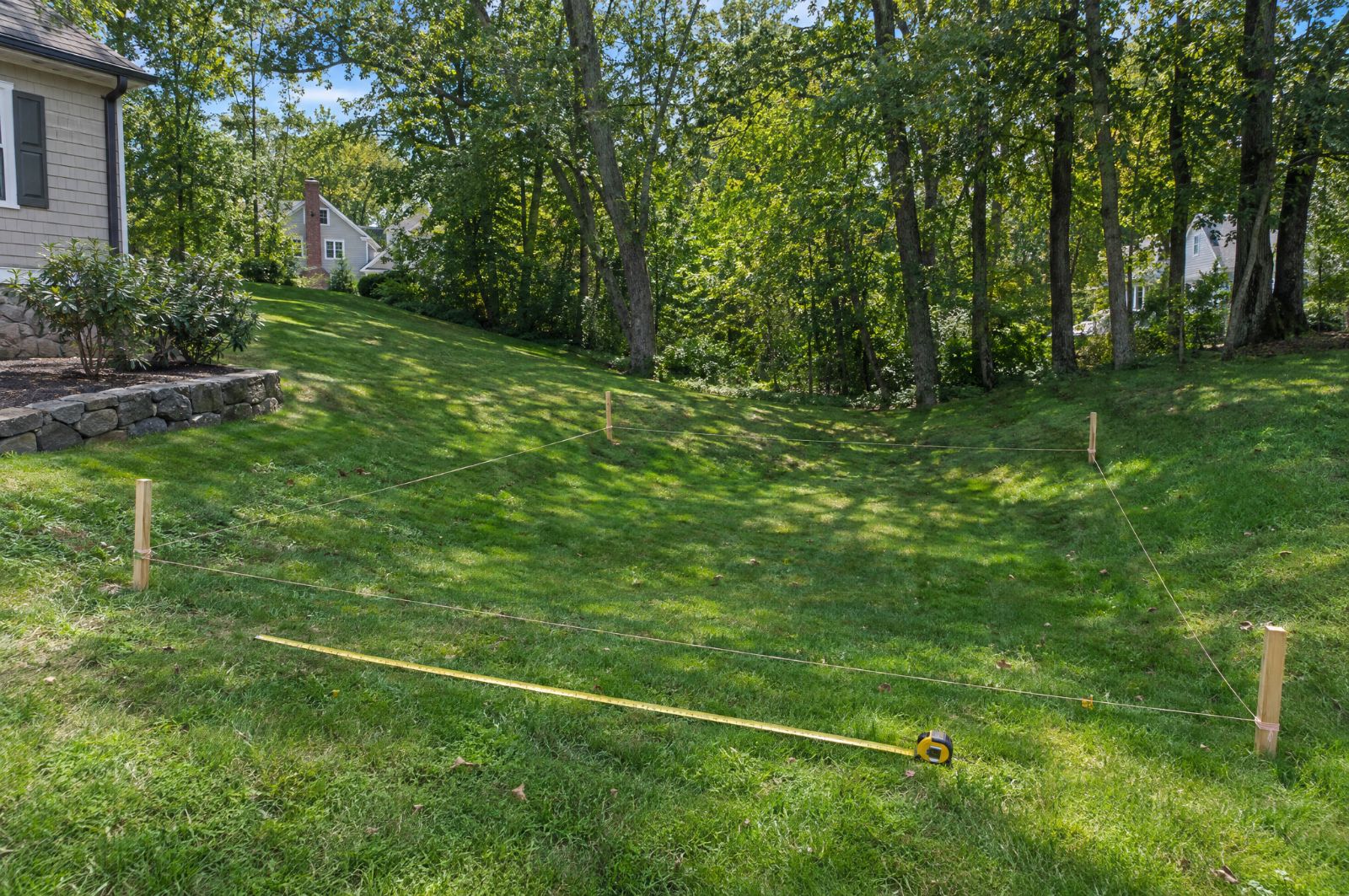
Plenty of yards in Wharton have a low corner, a slope that washes out, or a dip where the lawn never looks right. Before you fill it, you need to know how much material to get. Too much leaves you with a pile on the driveway. Too little stops the job halfway. The math is easier than it looks.
Fill dirt and topsoil do different jobs
Fill dirt is mostly subsoil, sand, clay and some rock. It has little organic matter, so it packs down and stays put. That makes it right for raising low areas and building up grade.
Topsoil is the darker, looser layer that plants grow in. It is the finishing layer, not the bulk. A typical approach for a low spot in a lawn is fill dirt for most of the depth, then a few inches of topsoil on top so grass can root.
The basic formula
Bulk materials are measured in cubic yards. One cubic yard is 27 cubic feet. To find what you need:
- Measure the length and width of the area in feet.
- Measure how deep you want to fill, then convert to feet. (6 inches is 0.5 feet. 4 inches is about 0.33 feet. 3 inches is 0.25 feet.)
- Multiply length by width by depth to get cubic feet.
- Divide by 27 to get cubic yards.
Length × width × depth (in feet) ÷ 27 = cubic yards
Three worked examples
Raising a low spot
A 10 by 15 foot dip that needs to come up 6 inches: 10 × 15 × 0.5 = 75 cubic feet. Divide by 27 and you get about 2.8 cubic yards. Round up to 3.
A topsoil layer before seeding
A 20 by 25 foot area getting 4 inches of topsoil: 20 × 25 × 0.33 = about 165 cubic feet. Divided by 27, that is just over 6 cubic yards.
Mulch for planting beds
Beds adding up to 300 square feet, mulched 3 inches deep: 300 × 0.25 = 75 cubic feet, or about 2.8 cubic yards. If you have several beds, measure each one and add the square footage together first.
Quick coverage reference
One cubic yard of material covers roughly:
- 324 square feet at 1 inch deep
- 162 square feet at 2 inches deep
- 108 square feet at 3 inches deep
- 81 square feet at 4 inches deep
Tips that keep the numbers honest
- Measure odd shapes in pieces. Break a curved bed or L-shaped area into rectangles and add them up.
- Plan for settling. Loose fill compacts once it is tamped and rained on. Many people add about 10 percent to their total.
- Work in layers. Spread and firm fill a few inches at a time rather than all at once, so it settles evenly.
- Look at the cause. If a low spot keeps returning or water pools there after every storm, filling it may only hide the problem. Drainage issues are a job for a contractor who handles grading and drainage.
- Time seeding right. Cool-season lawns in New Jersey fill in best from seed in late summer to early fall.
Where Boris comes in
Boris does not sell or deliver fill dirt or topsoil, and he does not do grading. Once the ground is set, though, he can keep it looking good. He handles lawn mowing and lawn care and mulch delivery and spreading for homeowners in Wharton and across Morris County.
Fill dirt questions
Can I just use topsoil to fill a deep hole?
It is better not to. Topsoil is high in organic matter and settles more as it breaks down. Use fill for the bulk and topsoil for the top few inches.
How much extra should I get?
About 10 percent above your calculation is a common rule of thumb. It covers settling and small measuring errors.
Does the same formula work for mulch?
Yes. Use the bed’s square footage and a depth of about 2 to 3 inches. Keep mulch pulled back from trunks and shrub stems.
Ready for a yard that stays in shape?
Boris works with Wharton homeowners directly on lawn care, mulch and bed upkeep. No salespeople, just the owner.