
5 Types of Landscape Sand Every Chester, NJ Homeowner Should Know
April 17, 2025
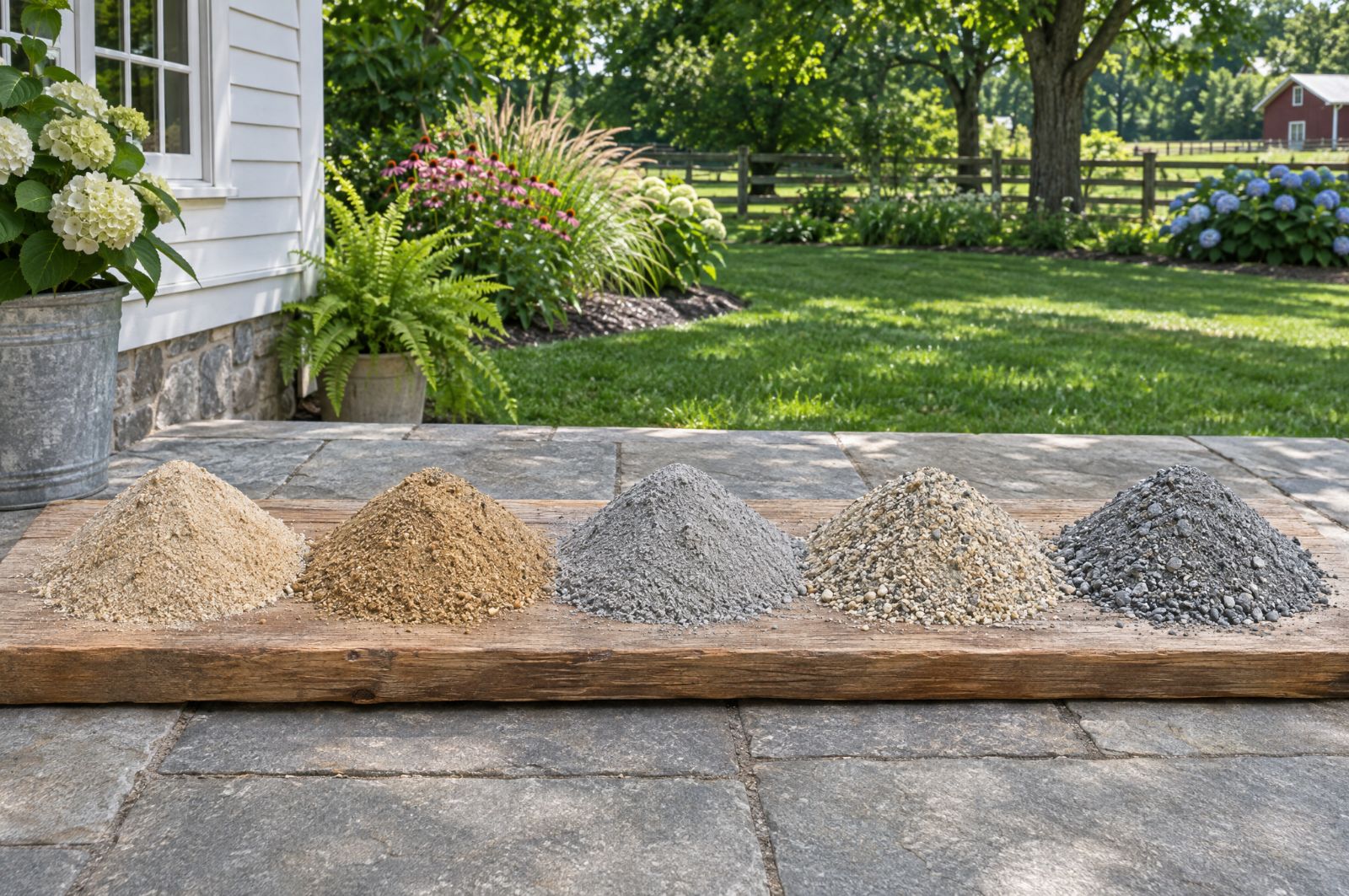
Chester has everything from old farmhouses to newer neighborhoods, and plenty of those properties have a patio, walkway or play area that relies on sand. If you are planning a project or talking with a contractor, it helps to know the basic types and what each one is for. Here are five you will hear about most.
1. Concrete sand
Coarse, gritty and angular. The sharp grains lock together and let water drain through, which makes concrete sand the usual choice for the thin bedding layer under pavers. As the name suggests, it is also mixed into concrete.
- Good for: paver bedding, concrete mixes.
- Not great for: sandboxes, since it is rough on hands and knees.
2. Mason sand
Fine, smooth and uniform. Mason sand is made for mortar, the stuff that holds bricks and stone together. Its smooth texture is why people sometimes use it in play areas, though play sand is made specifically for that.
- Good for: mortar for brick and stone work.
- Not great for: paver bedding, because it packs tight and holds water.
3. Polymeric sand
A joint sand for pavers that contains binders. After it is swept into the gaps and misted with water, it hardens enough to hold the pavers in place and resist washout. It also makes it harder for weeds and ants to settle in, though it does not stop them completely.
- Good for: filling joints between pavers.
- Watch out for: installing it on wet pavers or before rain, which can leave a haze on the surface.
4. Play sand
Washed and screened to be soft and clean. This is the sand made for sandboxes and play areas. It is not designed for any structural job.
- Good for: sandboxes and kids’ play spaces.
- Tip: cover the sandbox when not in use to keep out leaves, debris and animals.
5. Stone dust
Strictly speaking, stone dust, also called screenings, is crushed stone rather than sand, but it often gets lumped in with sand. It compacts firmly, so it is sometimes used as a base for stepping stones or under some walkways and walls.
- Good for: firm, compactable bases in some applications.
- Keep in mind: it drains more slowly than coarse sand, so a hardscape contractor should decide whether it suits your project.
Who should handle what
Knowing the types helps you ask good questions, but most sand-based work is a job for specialists. A rough breakdown:
- Hardscape contractor: patios, walkways, driveways, retaining walls, masonry and anything involving drainage. These depend on proper excavation, compaction and pitch.
- You: filling a sandbox, setting a few stepping stones in a garden path, topping up paver joints.
- Your landscaper: keeping the lawn, beds and edges around all of it looking tidy.
Where Boris helps
Boris does not sell sand or install hardscape. What he does is keep Chester yards in good shape around those features. Landscape bed maintenance includes edging and weeding beds, plus pulling weeds from paver joints and stone areas as part of regular upkeep. Spring and fall cleanups clear leaves and winter debris from lawns, beds, patios and walks, and a property maintenance plan keeps all of it on a regular schedule. Boris serves Chester and nearby Morris County towns, and you talk with him directly.
Landscape sand questions
What sand goes under pavers?
Coarse concrete sand is the usual bedding layer, placed over a compacted gravel base. Your hardscape contractor will confirm what suits your site.
Is mason sand OK for a sandbox?
It is soft, but play sand is made and cleaned specifically for children’s play areas, so it is the safer pick.
Why does polymeric sand turn hazy?
It usually happens when residue is left on the paver surface before wetting, or when the pavers were damp during install.
Keep your Chester property looking its best
Boris can keep the beds, edges and stone areas around your hardscape clean and weed-free.